Stillwater Fly Fishing offers a Different Kind of Colorado Fishing
Most anglers come to the Western Slope and southwestern Colorado for the rivers, and for good reason. But the region’s lakes and reservoirs offer something the freestone water can’t: a chance to slow down, read a whole system, and hunt fish across open water. Stillwater fly fishing rewards a different set of skills, and once those skills click, they make you a sharper angler everywhere you fish.
Stillwaters across the Western Slope and southwest Colorado range from high desert reservoirs to alpine lakes tucked under towering peaks, and no two fish exactly alike. What ties them together is that the day is rarely handed to you. Wind, light, water clarity, and water level all shape where fish hold and feed, and those variables can change fast. If you enjoy paying attention to those details and adjusting as you go, there is a lot of water here to work with.
This guide is about the approach: how to read a lake, control depth, fish the wind, move with the seasons, and stay safe on big water, rather than a tour of specific spots. Bring those principles to any reservoir or lake in Colorado and you’ll fish it better than the angler camped in one place hoping the fish come to them.
Think Like a Hunter, Not a River Angler
The single biggest mental shift in stillwater is this: stop expecting fish to sit in one place. On a river, current concentrates fish in predictable lines. On a lake, there is no current doing that work for you. Trout cruise. They follow food, comfort, and safety along travel corridors that shift with conditions.
Your job is to intersect those corridors. That means thinking less about “where is the fish right now” and more about “where are fish moving through, and how do I put my fly in that lane long enough for one to find it.” It’s a hunter’s mindset, and it changes every decision you make – where you stand, where you cast, how long you stay, and when you move.
Even “stillwater” isn’t truly still. Wind creates drift, waves, and subtle currents that push plankton, insects, and baitfish into feeding lanes. Learning to see that movement is most of the game.
Reading a Stillwater: Find the Structure That Concentrates Fish
You don’t need a secret cove. You need structure that creates repeatable travel routes, and most of it is readable from shore or a boat once you know what to look for.
Points, saddles, and walls. Points act like underwater intersections – fish cruise either side depending on wind and light. Saddles, the low “bridge” between two higher areas, funnel movement from one basin to the next. Steep banks and canyon walls give fish quick access to deep water and shine when trout are relating to depth changes rather than the shallows.
Flats-to-basin transitions. Long flats that roll into deeper water are classic stillwater lanes. On calm mornings, trout slide up onto the flat to feed; when light or wind changes, they slide back off the edge. Fish that edge the drop – not the middle of the flat and not the dead center of the basin.
Drop-offs, weed edges, and coves. Shoreline drop-offs and weed lines hold and funnel food, and trout patrol them constantly. Protected coves give you calmer water to fish and present when the wind is up. A low reservoir can expose long flats and new drop-offs that become excellent feeding routes – read the shape of the shoreline you’re handed that day.
The habit that ties it together: rotate. If a spot stops producing, change depth, angle, or structure type rather than standing in one place waiting. Cover water with intention until you find active fish, then slow down and work that pattern.
Let the Wind Work for You
New stillwater anglers fight the wind. Experienced ones use it. Consistent wind pushes insects and drifting food toward certain banks and points, and trout follow those concentrated food lines. The chop on the surface also gives fish a sense of cover, so they’ll often feed more confidently and a little closer to shore than they would on glassy water.
So when the wind comes up, look at where it’s stacking food: wind-blown points, saddles, and gently sloping shorelines that catch the drift. That’s frequently where the day’s best feeding happens. When the wind shifts, the fish shift with it, so be ready to move and stay in front of active water.
There’s a hard limit to this, though, and it’s a safety one – covered below. Fishing the wind is good. Gambling with it is not.
Depth Control: The Heart of Stillwater
If there’s one skill that separates consistent stillwater anglers from frustrated ones, it’s depth control. Big water is a depth-control puzzle: if you can’t keep your fly at the level fish are using, you’re just practicing your casting.
Set your depth with intention on every cast. When you get a take, pay close attention to the count-down depth, the retrieve speed, and the distance from shore that produced it – then repeat that exact presentation before you change anything else. One fish at a specific depth is information; ignoring it and casting randomly throws that information away.
Your tools for managing depth are line choice, leader length, and fly weight. A floating line with a long leader and an indicator suspends a fly at a precise level. An intermediate line works the mid-column. A sink line gets you down to probe drop-offs and deeper edges. Leader length and tippet matter, but they matter less than simply getting and keeping the fly in the strike zone.
Seasonal Patterns on Western Slope Lakes
Spring and Ice-Off
After ice-off, the game is finding water that warms first. Trout cruise shallower edges and transitions when even a small temperature bump kicks off feeding, and they’re often hungry and forgiving after a long winter. This is prime time for intermediate lines, balanced leeches, chironomids, and slow presentations that stay in the zone. Focus on coves, flats, and gradual drop-offs, and adjust fly color and depth as clarity changes with the thaw. It’s also a quieter time on the water before the crowds build.
Summer
As water temperatures climb, fish slide toward deeper, cooler water and become a more deliberate depth-control challenge. Fish early and late – the low-light windows at dawn and dusk are when trout move shallow to feed – and adjust deeper as the sun gets high. Sinking lines and long leaders help you reach fish holding in cooler water through the middle of the day. Wind concentrates food during this season too, so follow the drift lines.
Fall
Fall brings some of the most consistent fishing of the year. Cooling water encourages trout to spread out and feed heavily before winter, moving back toward accessible shoreline structure, rocky edges, and flats. Leeches, callibaetis emergers, and attractor nymphs all earn their place. Lighter pressure and earlier low-light windows help your odds.
Some Western Slope reservoirs also hold kokanee salmon – landlocked sockeye that gather and run upstream in fall. Where they’re present, the run can concentrate fish and give trout a reason to cruise specific corridors. Kokanee are a managed fishery in Colorado, so always verify current regulations, seasons, and any closures before targeting them, and handle concentrated fish ethically. Colorado’s largest kokanee fishery is Blue Mesa Reservoir on the Gunnison River, with smaller numbers – and smaller fish – in waters like Ridgway Reservoir. The kokanee run is also where stillwater and moving water connect: in fall the fish push up the Gunnison and into its tributaries, and the Taylor River – a tailwater flowing out of Taylor Reservoir with roughly 11 miles of public access – is one of the most reliable places in the region to intercept running salmon.
Winter
Winter opportunities exist, but they come with access and safety limits. If ice is involved, stay conservative – conditions vary across a single reservoir, and “mostly frozen” is never a green light. This is a season where local, current information matters more than any general rule.
Core Presentations and Stillwater Rigs
Stillwater rigs don’t need to be complicated. They need to be built around depth and presentation.
Indicator and Nymph: The Slow Cooker
Yes, you can nymph a lake, and done right it’s deadly. The classic setup is a floating line, a long leader, an indicator, and one or two flies – usually a chironomid or small nymph – weighted enough to get down and stay down, suspended just above the depth where fish are cruising. It’s the best approach when trout are holding in a defined zone and not moving far to chase.
Three things matter more than the exact fly: set your depth deliberately, watch for subtle takes (many stillwater eats feel less like a strike and more like “something changed”), and keep the drift quiet so your rig isn’t dragging unnaturally fast.
Stripping Streamers and Leeches: The Search Tool
When you need to cover water and find active fish, stripping is your friend. Start with an intermediate line for mid-column work, or a sink line when fish are clearly deeper or you want to probe a drop. Then rotate retrieves to find the mood:
Slow hand-twist for cold water or neutral fish
Short strips with pauses when fish are tracking but not committing
Longer pulls when you want to imitate a fleeing baitfish
Pauses are where a lot of eats happen – the fly changes speed, drops slightly, or hangs for a moment. If trout are chasing but not eating, slow down or lengthen the pause before you change flies.
Dry Fly on a Reservoir: Real, but Not the Default
Dries happen on lakes, but they’re not the everyday tool. Look for calm or lightly broken water near structure, visible surface feeding, or evening windows as light drops. When you find consistent rises, fish a clean, controlled drift and don’t overwork the surface – stillwater trout get picky fast.
Building Your Fly Box
A Western Slope stillwater box doesn’t need to be huge, but it should let you adjust to depth, clarity, and mood. The core categories:
Chironomids – black, red, olive, and darker natural tones; often the most reliable subsurface producers in spring and early summer
Leeches – balanced leeches for suspending under an indicator, traditional patterns and buggers for searching on an intermediate line
Damselfly nymphs – increasingly important as water warms, especially around weed edges and flats
Callibaetis nymphs and emergers – a staple through much of the season, with adult patterns for surface windows
Scuds and general attractors – for filling gaps and matching local forage
Carry a range of sizes, weights, and profiles in each category. Size and depth usually matter more than having the one “perfect” pattern. Have us put together the perfect box of stillwater flies for the season you’re fishing with our Handpicked Stillwater Fly Selection.
Fishing From Shore vs. a Boat or Tube
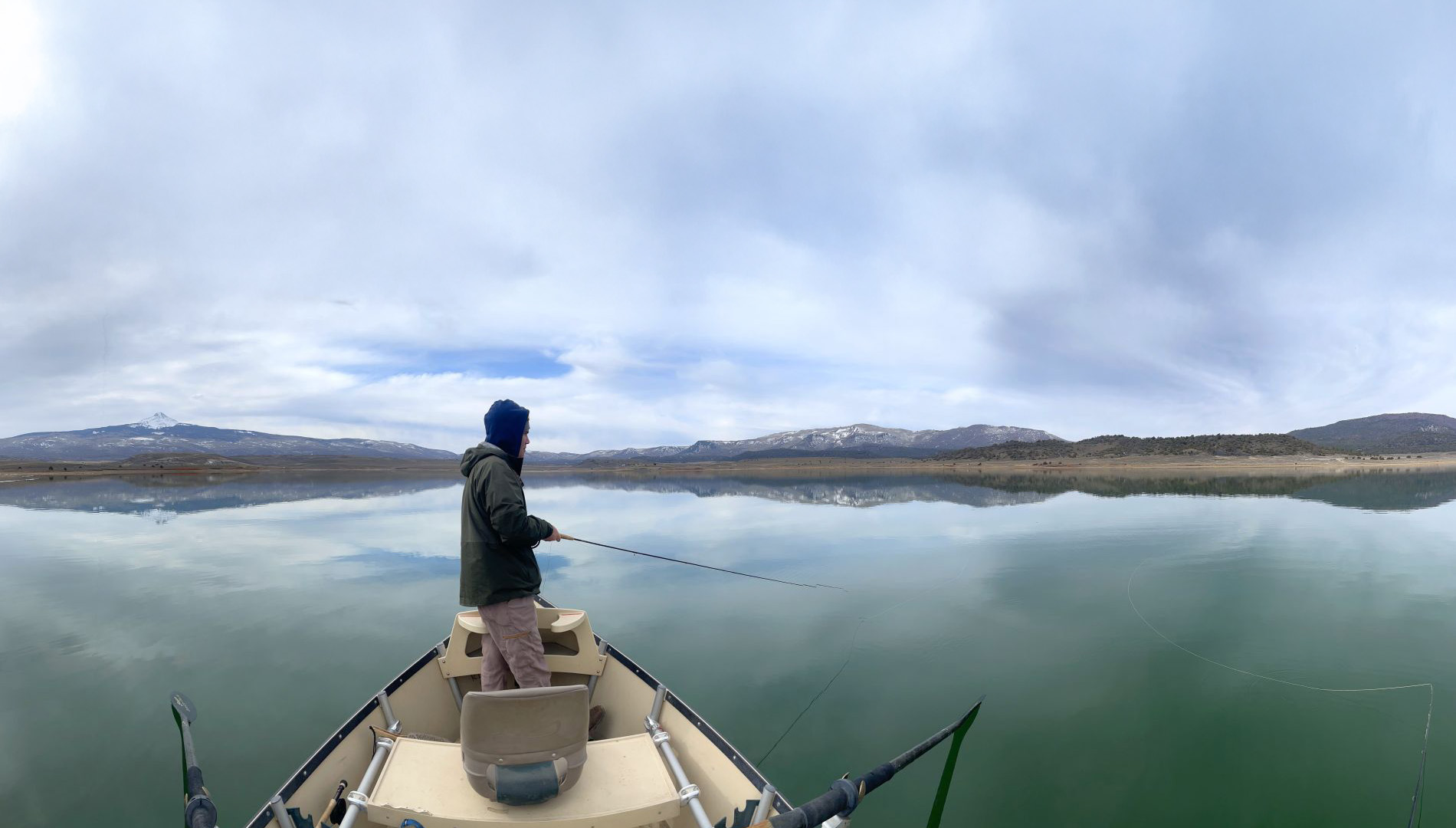
You do not need a boat to fish stillwater well. Plenty of productive water sits within reach of the bank, especially during spring, fall, low-light periods, and windy conditions that push food and fish toward shore. From shore your best tools are mobility, casting angles, and fishing transitions you can reach without wading into trouble.
A boat, pontoon, or float tube extends your range – you can reach deeper lanes, drift productive water, and repeat good passes. It also increases your exposure to wind and weather, so it raises the importance of the safety habits below. Either way, fish the structure and transitions, not the open middle of the basin.
A note on wading: many shorelines have soft silt or sticky mud that can make wading difficult and, in spots, genuinely risky. Test your footing in unfamiliar areas, and don’t push into soft-bottom zones where getting back out becomes the problem.
Gear That Makes Stillwater Easier
Stillwater doesn’t require a garage full of equipment, but a few right tools cut down on frustration:
Rods: a 5-weight for lighter presentations and calm days; a 6-weight when wind shows up or you’re throwing bigger flies
Lines: a floating line for indicator work and shallow windows, an intermediate for the mid-column and searching, and a sink line for deeper edges and drop-offs
Always bring: a net, layers for wind and fast-changing weather, and a clear plan for getting safely off the water
If you’d rather not invest in a full stillwater setup before you know you love it, a guided day solves that – a full-service shop provides flies, terminal tackle, rods, reels, waders, and boots, plus on-water instruction matched to the day’s conditions.
Safety and Stewardship on Big Water
This is the part anglers skip until they wish they hadn’t.
Wind, storms, and cold water. Large high-country reservoirs are known for strong, fast-building afternoon winds and sudden storms that can turn hazardous in minutes, and the water stays cold through much of the season. Build your day accordingly: fish early when the forecast is unstable, keep an eye on the sky, and when the wind starts building hard, don’t wait for the “last cast.” Head for shore. A conservative exit beats a heroic one every time.
Clean, drain, dry. Colorado requires watercraft inspections for aquatic invasive species at many waters before launching, with decontamination if needed. Even if you’re only running a float tube or small craft, build the habit: clean, drain, and dry your boat and gear between waters to help keep these fisheries healthy. Look for inspection stations at Ridgway State Park and Blue Mesa Reservoir.
Check conditions before you drive. Reservoir levels on managed systems fluctuate, which changes ramps, exposed structure, and how the shoreline fishes. A quick check of current conditions saves you from showing up to a ramp you can’t use or water that fishes nothing like you expected.
Licenses and passes. Everyone 16 and older needs a valid Colorado fishing license, and some state wildlife areas require an additional SWA pass just to access the property. It’s worth confirming the requirements for the specific water you’re fishing before you go.
Species You’ll Encounter
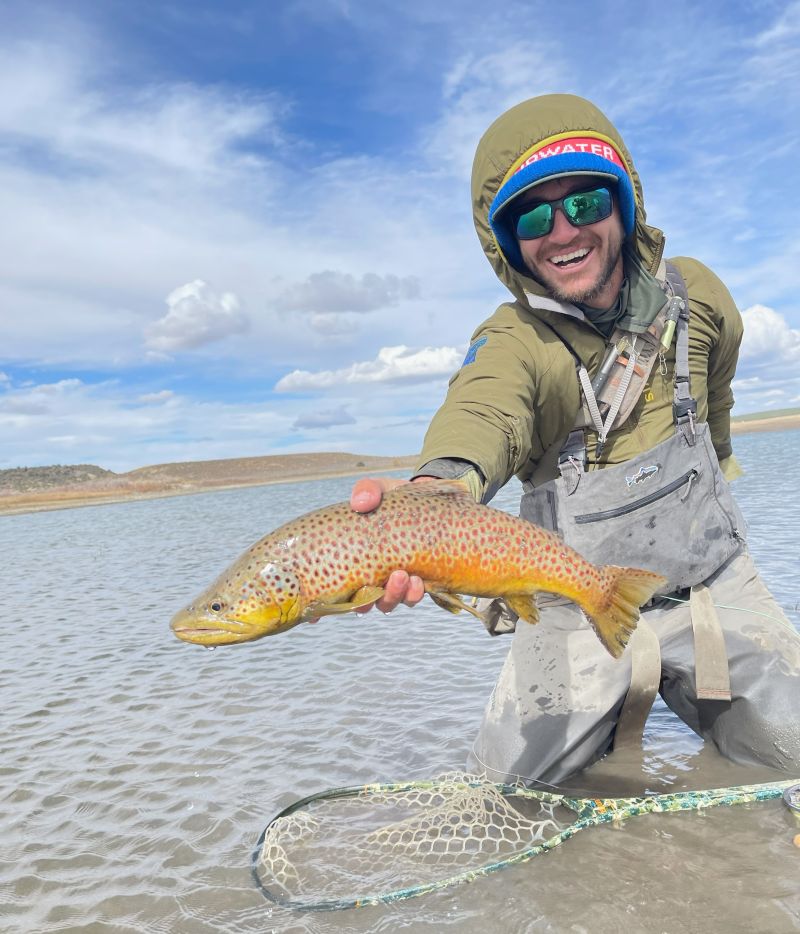
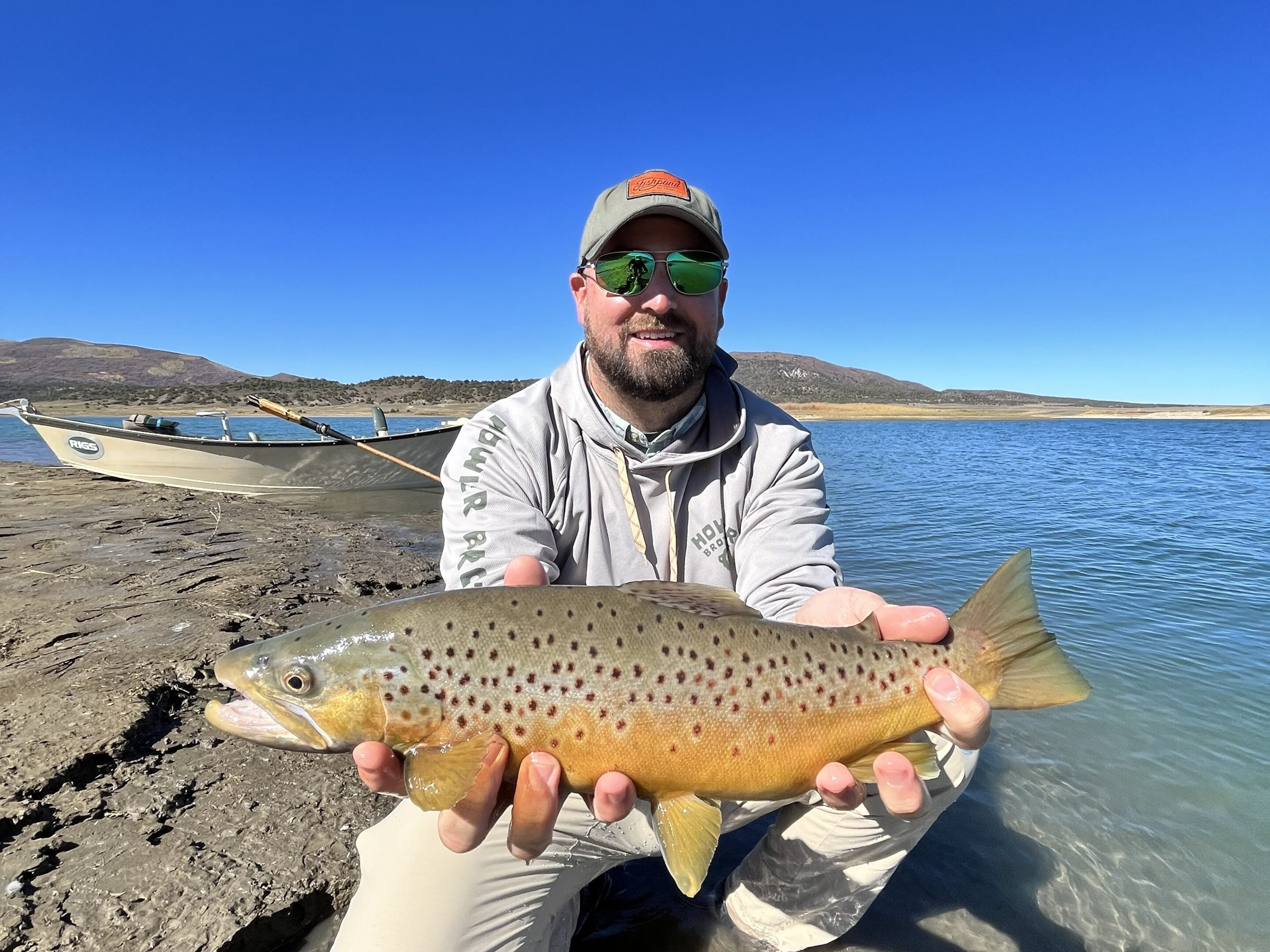
Across Western Slope stillwaters you’ll find rainbow, brown, cutthroat, and brook trout, and – depending on the water – lake trout, tiger trout, kokanee salmon, smallmouth bass, carp, walleye, and sunfish. The core stillwater rules hold for all of them: intersect travel routes, control depth, and match your pace to the fish’s mood. The main difference is where they spend their time — browns tend to relate more to structure, rainbows often cruise more open water, and cutthroat can work edges aggressively when conditions line up.
Warmwater Opportunities on Western Slope Stillwaters
While trout are the main draw for many anglers exploring Western Slope lakes and reservoirs, they aren’t the only fish worth paying attention to. The region also has a growing number of warmwater and mixed coldwater/warmwater fisheries that offer a different set of species, tactics, and challenges. These lakes can be a great change of pace, especially during the warmer months when trout are holding deeper or feeding in shorter low-light windows.
Bass are the most familiar warmwater target. Several regional stillwaters hold strong populations of smallmouth and largemouth bass, and while they’re often prized by conventional anglers, they’re just as exciting on a fly rod. Their aggressive nature, willingness to chase larger flies, and habit of relating to structure make them a fun, active stillwater option. Weed edges, rocky banks, submerged timber, drop-offs, and shaded shoreline structure are all worth covering with streamers, baitfish patterns, crayfish patterns, and topwater bugs when conditions line up.
Carp are another species gaining real traction in the fly fishing community. They may not have the best reputation — many anglers still think of them as a bottom-feeding “trash fish” — but that reputation undersells how challenging and rewarding they are on a fly rod. Carp are wary, powerful, and surprisingly technical. They demand quiet movement, accurate casts, careful fly placement, and strong sight-fishing skills. For anglers looking to improve their ability to spot fish, read body language, and make precise presentations, carp are one of the best stillwater teachers around. Hook one, and you’ll quickly understand why more Colorado fly anglers are starting to seek them out.
Where Local Knowledge and a Guide Pays Off
Stillwater has a lot of moving parts, and on a big lake those parts shift quickly: wind direction, light, water temperature, and fish behavior can all change through the day. This is where local knowledge earns its keep. Knowing how a given water responds to weather, water level, and season keeps you on the most productive water available instead of chasing water that’s already moved on.
A guided day shortens that learning curve dramatically. For newer stillwater anglers, having someone read cruising fish, dial in an indicator rig, and call subtle takes in real time turns a confusing day into a productive one. For experienced river anglers, it’s the fastest way to add stillwater tools – depth control, wind reading, retrieve selection – that carry over to every lake and reservoir you fish afterward. RIGS offers full-day and ¾-day stillwater trips to local lakes and reservoirs if you’re ready to expand your fly fishing skills.
Plan a Complete Western Slope Fishing Trip
Stillwater is at its best as part of a bigger trip. The Western Slope lets you pair lake days with classic freestone and tailwater river fishing, so a single visit can move from reservoir to river without long drives between waters. A stillwater morning and a river afternoon – or a multi-day mix matched to season and conditions – is the most rewarding way to get to know this corner of Colorado.
That variety is what our multi-day trip options are built around. Rather than fishing one piece of water, we help you string together a complete itinerary matched to the season, the conditions, and your group’s experience level.
If you want current conditions, seasonal movement notes, or a short list of flies and rigs that match what’s happening right now, reach out or stop by the shop. We’ll help you build a plan that fits your timeline, your gear, and the way you like to fish.
Frequently Asked Questions About Western Slope Stillwater Fly Fishing
What makes stillwater fly fishing different from river fishing?
On a river, current concentrates fish in predictable lies. On a lake, there’s no current doing that work, so trout cruise along travel corridors that shift with wind, light, and temperature. Success comes from intersecting those lanes and controlling your depth rather than reading a single seam. It’s a hunter’s mindset more than a drift-and-mend one.
When is the best time of year to fly fish Western Slope lakes?
Spring ice-off and fall are the most consistent windows, when trout move into shallower, reachable water. Summer still fishes well but rewards early starts, evening sessions, and better depth control as fish move deeper. Winter is limited by access and ice safety. Always check current conditions before committing to a plan.
Do I need a boat to fish stillwater?
No. Plenty of productive water sits within reach of the bank, especially in spring, fall, low light, and wind that pushes food toward shore. A boat, pontoon, or float tube extends your range and lets you repeat productive drifts, but it also increases your exposure to wind — so it raises the importance of a conservative safety plan.
How do I find fish on a big reservoir?
Look for structure that creates repeatable travel routes: points, saddles, drop-offs, weed edges, and flats that transition into deeper water. Fish the edges of that structure, use the wind to find concentrated food, and rotate through areas until you locate active fish — then slow down and repeat what’s working.
What flies and lines should I bring?
For flies, build around chironomids, leeches, damselfly nymphs, callibaetis, and scuds in a range of sizes and weights. For lines, a floating line plus an intermediate covers most situations, with a sink line for probing deeper edges. Your line choice matters most when it helps you keep the fly at the right depth.
What are the biggest safety risks on Western Slope reservoirs?
Fast-building afternoon wind and storms are the major hazard on large high-country lakes, and cold water is a factor through much of the season. Watch the sky, fish early when the forecast is unstable, and head for shore as soon as the wind builds hard. Plan a conservative exit, not a heroic one.