
A Lower-Contact Way to Release Fish: Quick-Release Tools vs. Forceps
Most of us grew up releasing fish with a pair of forceps, and there’s nothing wrong with that. Forceps are cheap, they’re on every vest and pack in the shop, and they get the job done. But for a lot of the fish we land – a clean hook in the corner of the mouth, a barbless fly, a trout resting calmly in the net – reaching for forceps means lifting the fish and adding handling it didn’t really need. Quick-release tools like the ones from Loon and Lamson Ketchum are built for exactly those situations: they let you back a hook out while the fish stays in the net and in the water.
This isn’t a “throw away your forceps” article. It’s about adding a lower-contact option to your kit and knowing when to use it.
How the tools actually work
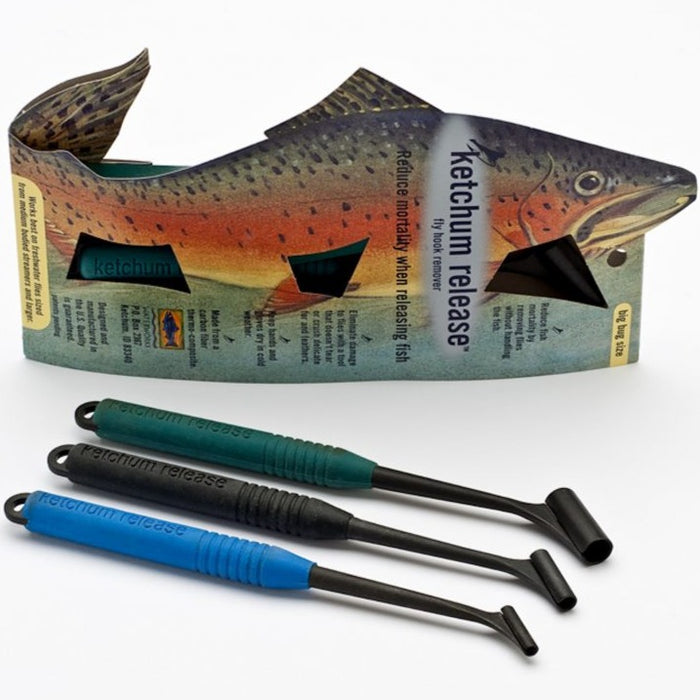 Both the Loon and the Waterworks Ketchum tools work on the same basic idea, even though the shapes are a little different. You run the tool down your tight leader until it reaches the hook, then use the tool to push the hook back out along the same path it went in – following the bend of the hook rather than yanking against it. Because the tool rides the leader, you can do the whole thing by feel, without pinning the fish down or getting your fingers near its face.
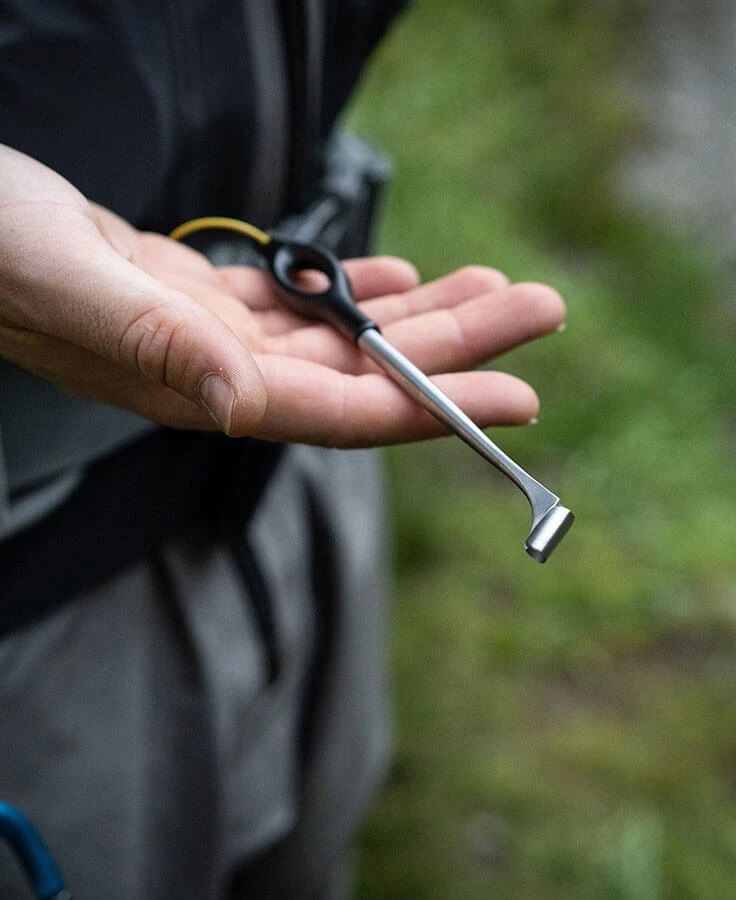 The magic is really in the geometry. A hook wants to come out the way it went in. When you keep tension on the leader and let the tool follow that line, the hook releases with almost no drama. Fight it sideways and you’ll feel resistance; follow the bend and it slides free.
We’re deliberately not crowning a winner between the two brands in the video. They use slightly different designs and different anglers prefer different feels in the hand. The best one is the one you’ll actually reach for.
Practice the motion before you’re standing in a river
The single biggest reason people give up on these tools is that the first time they try one is with a fish flopping in the net and a buddy waiting to keep fishing. That’s the worst possible classroom.
Do a few dry runs at home. Hook a fly into a piece of foam, or into a rubber practice fish, or set a hook around a cord or soft loop, and run the tool down to it a dozen times until the motion is automatic. Two minutes of practice on the couch is worth more than a season of fumbling on the water. Once your hands know the move, doing it on a real fish underwater becomes second nature.
Pinch your barbs – it changes everything
Quick-release tools and barbless hooks are a natural pair. A pinched-barb hook backs out cleanly with a fraction of the effort, which means less time, less handling, and less damage to the fish. Pinch your barbs at the vise with a pair of smooth-jaw pliers, not streamside in a hurry, so you’re never tempted to skip it. A barbless hook plus a quick-release tool is about the lowest-stress release you can give a fish short of a long-distance release.
When to still reach for forceps
These tools shine on simple hook placements. They are not the answer for everything, and that’s worth being honest about:
- Deep or throat hooks — if the fly is down past the mouth, you want the control and grip of forceps, and sometimes it’s better to cut the tippet and leave the fly.
- Toothy or thrashing fish — anything that won’t sit still or could damage the tool.
- Multi-hook or articulated flies — more points of contact than a quick-release tool is designed for.
Keep your forceps on your pack. Think of the quick-release tool as the first thing you try when the hook is simple, and forceps as the backup for everything else.
Keep the fish wet and keep it short
None of this matters if the release itself is stressful. The whole point of a quick-release tool is to keep the fish in the water, so lean into that. Wet your hands before you touch anything. Keep the fish submerged in a rubber net bag while you work. And treat time out of water like holding your breath — if you wouldn’t want to be up there that long, neither does the fish.
A good release is quiet and quick. The right tool, a pinched barb, and a little practice get you there.
Gear mentioned: Loon quick-release tool, Lamson Ketchum Release tool, forceps, rubber landing net, barbless hooks. Ask us in the shop which quick-release design fits your setup — they feel different in the hand and it’s worth trying both.