
Choosing a Landing Net (and Why Sometimes You Can Just Replace the Bag)
Walk into the shop and you’ll see nets in every size, handle length, and hoop shape, from Orvis, Fishpond, Simms, and Solitude. It’s easy to assume the most expensive one is the “best,” but a net is one of the few pieces of gear where the right answer depends almost entirely on how and where you fish. A perfect boat net is a nuisance on a small brushy creek, and a tidy little wading net won’t reach a fish from the front of a drift boat. Here’s how we think about choosing a landing net and why a worn-out net usually doesn’t mean buying a new one at all.
Start with how you fish, not the price tag
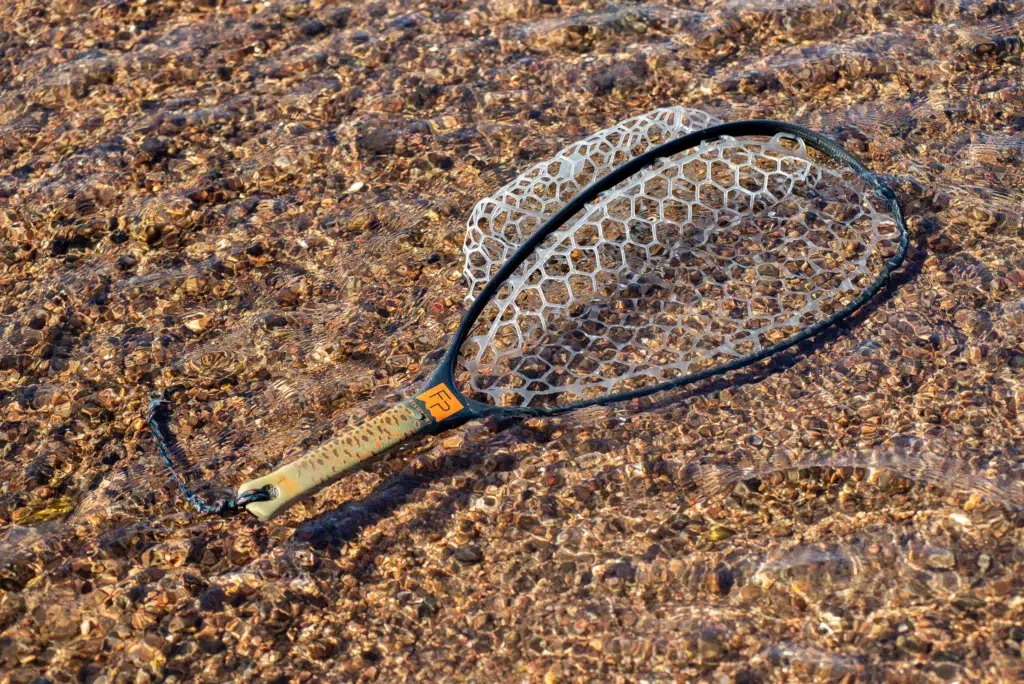 Wading tight, brushy water? You want a shorter handle and a compact hoop that stays out of the way when you’re pushing through willows. Something like the Simms Daymaker or a Solitude Silver Creek Net is a small size that disappears on your back until you need it.
Fishing from a boat or reaching down a high bank? Now handle length is your friend. Simms makes the Daymaker Boat Net with a long, two-piece handle that detaches for storage, and Fishpond’s Mid-Length and boat-style Nomad nets give you the reach without living in the way. That extra reach is the difference between netting a fish cleanly and lunging for it.
One rule that saves a lot of heartbreak: match the hoop to the biggest fish you realistically expect to land, not the average one. A bigger opening gives you a larger target when you’re netting solo, and a deeper bag keeps a fish resting quietly in the water instead of trying to launch itself back out.
The features that actually matter
Frames on landing nets like the Fishpond Nomad and the Simms Daymaker are built from carbon-fiber composite, which keeps them light and buoyant – a real thing you’ll appreciate on a long hike in or a long day of one-handed netting.

The bag is where fish safety lives. All four brands we’re featuring use rubber or rubber-style mesh instead of old knotted nylon, and that matters for three reasons: rubber is far gentler on a fish’s slime coat, your flies don’t snag and tangle in it the way they do in nylon, and it doesn’t freeze into a stiff mess on a cold morning.
Hoop shape counts too. Orvis’s Wide-Mouth nets use a wider opening and a deeper knotless bag, which makes guiding a fish in- and backing a hook out once it’s in there – noticeably easier. And a few nets, like Solitude’s carbon models, build in a magnetic release so the net rides on your back and comes free with one motion.
Keep the fish in the net and in the water
A good net isn’t just a landing tool – it’s a holding tank. Once a fish is in a deep rubber bag, you can do everything else with the fish still submerged: back the hook out, get a quick photo, let it catch its breath, and tip the net to let it swim off under its own power. The less that fish leaves the water, the better it swims away. Build your whole netting routine around keeping it wet.
When to replace a bag and when to buy a new landing net
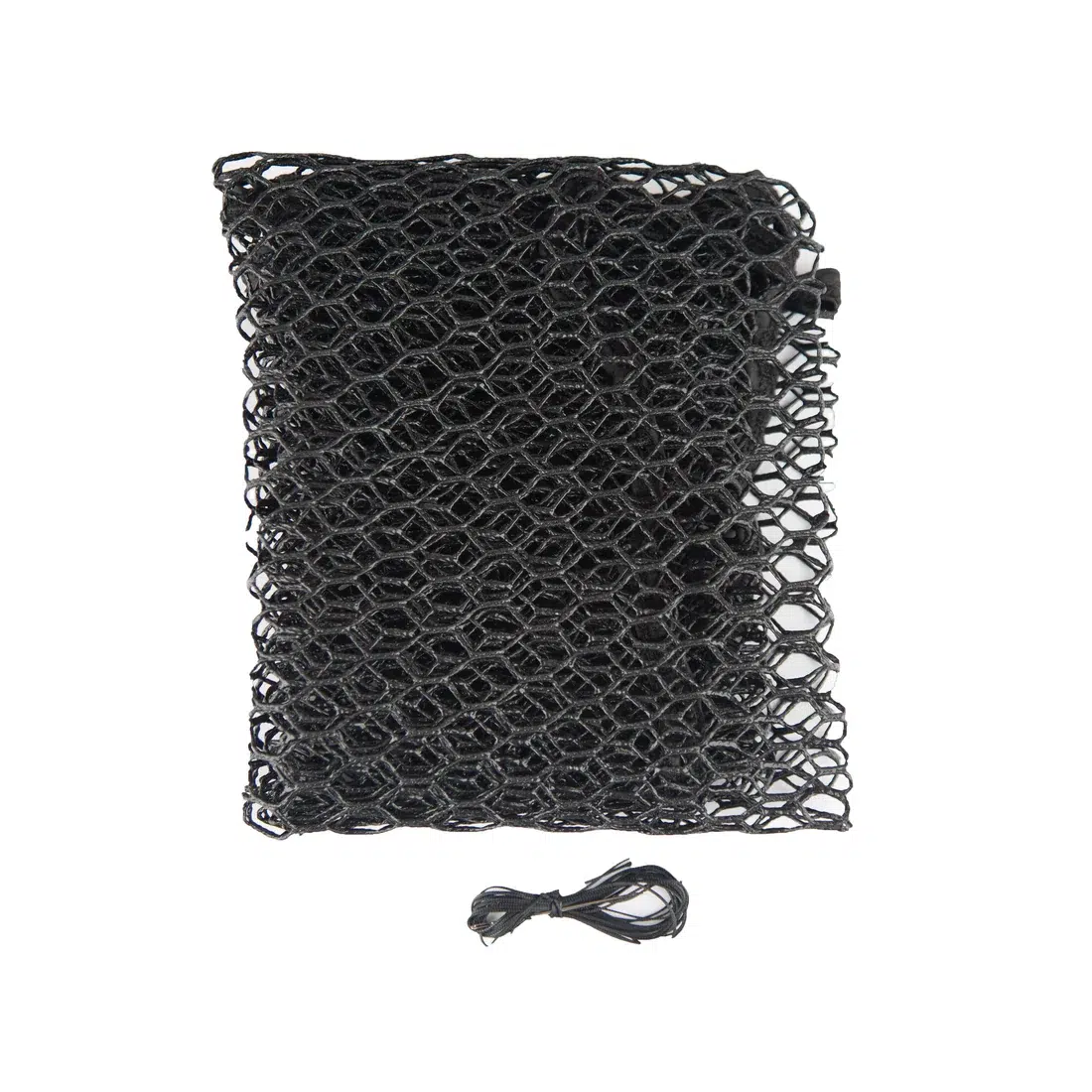 The rubber bag is almost always the first part of a net to wear out, and here’s the good news: every brand we carry sells replacement bags. A torn bag is not a dead net.
Replace the bag when you see any of these: holes, a tear starting where the bag laces to the frame, rubber that’s gone cracked or stiff, or a bag that’s stretched out and no longer holds its shape. Those failures tend to happen right at the attachment points, so that’s the first place to inspect.
The one thing to get right is fit – replacement bags are sized to specific frames. Fishpond’s Nomad bags come in 12.5″, 15″, and 19″ (plus an extra-deep 19″), each matched to particular Nomad models, and Simms offers 9″, 17″, and 19″ bags for the matching Daymaker sizes. Check your net model before you order.
Re-stringing is easier than it looks. A typical Fishpond replacement kit comes with the bag, the Dacron lacing cord, and a threading needle, so it’s a quiet bench project on a winter evening — thread the cord through the frame holes, tension it evenly around the hoop, and you’ve got a net that’s good as new for a fraction of the cost of replacing it.
However, if your net hoop has started to crack, has broken holes that hold the rubber bag or your handle has damage that inhibits your ability to hold the net comfortably – this is when you buy a whole new net. There is also something to using a net that can change over time. Like all things, once you use it for a while you will discover the pros and cons of a net. Normally, it is too small or big for how you fish or you don’t like how the handle feels in your hand. Try out as many as you can in the shop. Reviews will only give you so much information. What you like is not always what someone else likes.
A couple of small habits for form
- Rinse and dry your net after fishing, especially after saltwater or a slimy day, and it’ll last much longer.
- Don’t lift a heavy fish by the very end of a long handle at full extension. That leverage is how frames and bags fail. Choke up and support the hoop.
- Buy the net that fits your fishing, keep the fish wet in it, and swap the bag when the rubber gives out. That’s a net that lasts for years.
Brands mentioned: Orvis (Wide-Mouth), Fishpond (Nomad), Simms (Daymaker), Solitude. Bring your net frame into the shop if you’re not sure which replacement bag size fits – we’ll match it up.